 ENGAGEMENT DRIVES RESULTS!
A Guide to Premium Vinyl Options for Custom Binders
At Binders Inc., we believe the foundation of exceptional custom binders and presentation products begins with excellent materials.
That’s why we offer vinyl binders in three distinct Polyvinyl Chloride (PVC) options—Matte Suedene, Dull French Calf, and Castilian Faux Leather—each engineered to serve different aesthetic, functional, and budgetary needs.
From smooth, economical canvases optimized for vibrant digital printing to richly embossed, premium textures designed for classic debossing, the following will help you select the perfect finish to elevate your brand.
What are the different types of vinyl used for binders?
Matte Suedene Vinyl
Appearance & texture: This type of vinyl does not look or feel like actual suede. It has a completely flat, non-reflective matte finish with a smooth feel. There is no embossing or texture applied to this material.
Cost: This is typically the most economical option of the three, making it an excellent choice for high-volume, cost-conscious manufacturing runs.
Decoration: Because the surface is very smooth, matte suedene is a highly versatile canvas. It does digital printing exceptionally well, allowing for crisp, vibrant graphics. It is also great for traditional screen printing and standard foil stamping.
- * *
Dull French Calf Vinyl
Appearance: Designed to simulate the slightly pebbled grain of natural calfskin leather (often described as resembling the fine natural creases on the back of a human hand). Its finish is matte (non-glossy), but because of its micro-embossed texture, there is subtle light diffusion, giving it a low-luster finish.
Cost: Dull French Calf sits right in the mid-range. It offers a noticeable step up in perceived quality and sophistication from matte suedene vinyl without carrying the premium price tag of heavier faux leathers.
Decoration: The light embossing is shallow enough that it still allows for digital printing, making it a great option when you need high-resolution artwork on a professional, textured background. It also takes screen printing, debossing, and foil stamping beautifully.
- * *
Castilian Faux Leather Vinyl
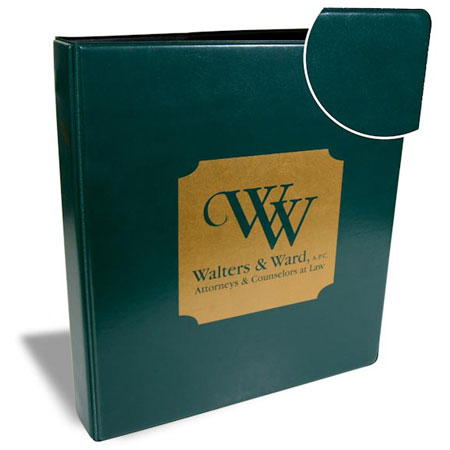
Appearance & texture: Castilian is engineered to look like hand-tooled leather. It has a deeply embossed, heavily textured topography with dramatic peaks and valleys, often finished with a slight tonal variation to enhance the “aged” leather look.
Cost: This is the premium, highest-cost option among the three, usually reserved for high-end, executive, or luxury product lines.
Decoration: The dramatic topography that makes Castilian look so luxurious is also its biggest decorative constraint. You cannot digitally print on Castilian faux leather because the high-and-low points of the deep embossing prevent the ink from laying down evenly. However, this heavy texture is ideal for deep, crisp debossing (blind stamping) or traditional foil stamping, which leans into the material’s classic, high-end aesthetic.
What Kind of 3-Ring Binder Do I Need?
Do I need a vinyl or poly binder? What about sheet size? Ring size?
FAQs about binders
What are the three popular types of binders?
The three main types of binders to choose from are turned-edge binders, vinyl binders, and poly binders. All are designed to hold documents using metal rings, but they are made from different materials and suitable for different environments and projects.
- Poly binders are made from a single sheet of plastic that is scored to form flexible hinges.
- Vinyl binders use vinyl wrapped around a rigid chipboard core to create a sturdy, structured cover.
- Turned-edge binders are also built with rigid chipboard, but instead of vinyl, they’re wrapped in higher-end cover materials like linen or specialty paper used for book covers. The edge of the material is wrapped (“turned”) around the edge of the chipboard, with a liner inside to match the outside material. The result is a binder that feels more like a refined hardcover book than a standard vinyl binder.
What is the difference between vinyl, poly, and turned-edge binders?
The biggest difference between binders made of vinyl, turned-edge, and polyplastic comes down to construction, appearance, and durability.
Vinyl binders tend to have a polished, professional look and allow for more customization options like foil stamping, debossing, or sealing printed graphics under clear vinyl.
Turned-edge binders offer the same advantages of vinyl, but they have more elegant material and a ”bookcover” design. Because they’re produced using automated systems that don’t require specialized tools, turned-edge binders also have flexible size options.
Poly binders, on the other hand, are made entirely from plastic and are typically more durable, lighter, and more flexible. Because they don’t use chipboard, they’re also more resistant to moisture, stains, and rough handling.
Is poly, vinyl, or turned-edge better?
Neither option is necessarily better. The right choice depends on how and where the binder will be used.
Vinyl binders are often preferred when presentation and branding matter. They work well for materials that need to look polished and professional, such as executive binders, company manuals, or a conference or corporate welcome binder given to clients or new employees.
Turned-edge binders are used in more high-end applications, like marketing campaigns, board meetings, and other events where making a lasting impression is paramount.
Poly binders are typically the better option when durability and easy cleaning are more important. Because they handle moisture, temperature changes, and heavy handling well, they are often used for things like HIPAA binders in hospitals, manuals for pet care companies, welcome binders for vacation rentals (like Airbnb), Bible study binders, or recipe binders used in the kitchen, such as organizing HelloFresh recipes.
What Causes Cold Cracking in Vinyl Binders?
Cold cracking isn’t a defect. Learn how temperature, handling, and shipping conditions cause vinyl binders to crack and how to prevent it.
Need help selecting the right binder for your next project?
If you’re not sure which material is right for your project, the experts at Binders Inc. are happy to walk you through the options. With decades of experience manufacturing custom vinyl binders, poly binders, presentation folders, and specialty binders for wholesale and personal use, we can guide you through every step of the process.
That includes selecting the right finish, determining the best ring style and capacity, choosing decoration methods such as digital printing, foil stamping, or debossing, and incorporating helpful features like pockets, label holders, or business card holders.
Have questions or ready to get started?
Contact us online, call us at (800) 962-1807, or email sales @ bindersinc.com to speak with a Binders Inc. specialist about your custom binder project.
We also have a handy comparison chart at: bindersinc.com/binder-comparison-chart!