 ENGAGEMENT DRIVES RESULTS!
3 RING BINDERS: Ring Size & Sheet Capacity
A guide to choosing the right 3-ring binder based on ring type and sheet capacity
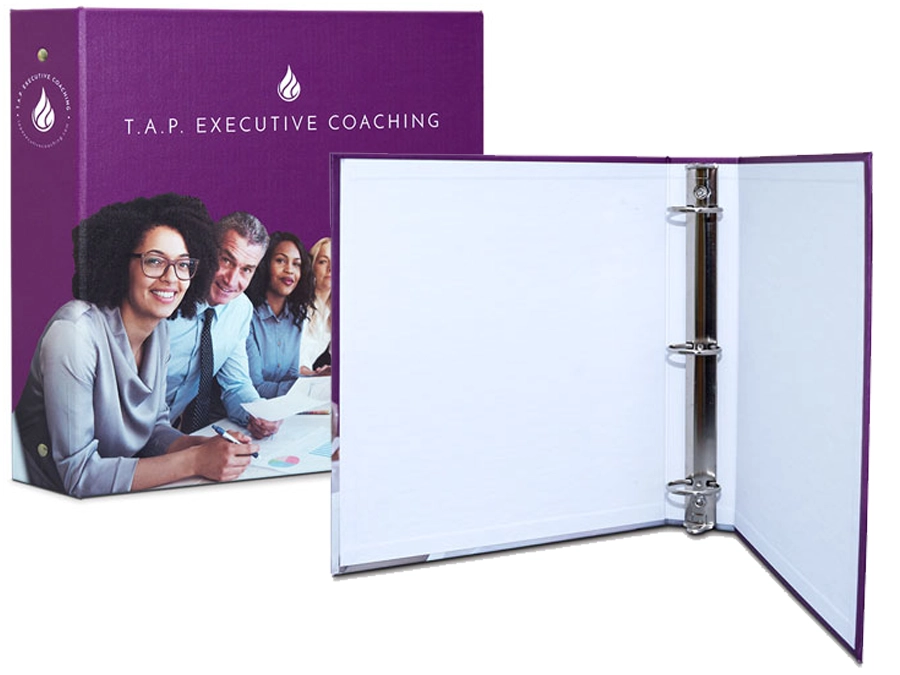
Whether you’re an Airbnb owner creating a guest welcome binder at a vacation rental, a home cook organizing your favorite recipes, or a business executive or small business owner who uses a binder to organize important documents, choosing the right 3-ring binder can make all the difference.
One of the most overlooked but important features of any 3-ring binder is the ring type and size. The wrong fit can make your binder bulky, hard to flip through, or even cause pages to tear out. With the right binder, your materials stay neat, accessible, and professional—no matter the purpose.
Below we’ll explain the difference between O-ring and D-ring binders and help you understand what size binder rings you’ll need based on how many pages you plan to include. We’ll also provide a helpful chart so you can quickly estimate binder capacity and choose the best fit for your needs.
Need help creating a custom 3-ring binder?
Binders Inc. has been the trusted choice for customizable binders, photo holders, specialty packaging for businesses, and more for over 40 years. Contact us online today to get personalized design advice for your next project.
Which is better, a D-ring or O-ring binder?
When it comes to choosing between a D-ring and an O-ring binder, the best option depends on how you plan to use it:
O-ring binders
O-ring binders are the more traditional choice and tend to be more compact, making them ideal for light use or smaller stacks of paper. However, because the pages rest entirely on the curved ring, they can be harder to turn—especially when the binder is full.
D-ring binders
D-ring binders, on the other hand, feature a flat edge that allows pages to lie more evenly and turn more smoothly. They also hold more sheets than O-ring binders of the same size, making them a great choice for larger or frequently used collections. The tradeoff? D-ring binders are typically bulkier and may cost a bit more.
So, which one is better? That depends on your needs, but one of the biggest deciding factors is often how many pages you need to store.
How many sheets of paper fit in a ring binder?
The dimensions of a ring binder, along with the type of ring you choose, will determine how many pieces of paper the binder holds.
For O-ring binders, the diameter of the ring (not the width of the spine) is the determining factor of how many sheets a 3-ring binder will hold. Standard binder ring diameters range from a 1/2 inch ring binder to a 3 inch ring binder.
Sheet capacity for a D-ring binder, on the other hand, is based on the length of the straight part of the ring, which generally ranges between one and three inches. 3-ring binders with D-shaped rings typically hold up to 25% more sheets.
The table below shows capacities for standard 20lb bond paper based on different ring binder sizes and types. If your sheets are thicker, you will need to reduce these numbers.
Binder paper capacity by ring type and size
| Ring size (inches) | O-ring capacity | D-ring capacity |
|---|---|---|
| 0.5 | 75 | 125 |
| 1 | 175 | 250 |
| 1.5 | 250 | 375 |
| 2 | 350 | 500 |
| 3 | 570 | 650 |
| 4 | N/A | 800 |
Please note: If you’re using thicker paper and you have a micrometer, you can measure one sheet’s thickness and then multiply by the number of sheets per binder. While this is a very technical way to tackle the problem, the micrometer doesn’t account for the air in between sheets of paper and the need to have room for movement when turning the pages.
Another option is to get the exact paper you plan to use, run it through a copier once, punch holes in it, and place it in the binder rings. Passing your paper through the copy machine like this will separate the sheets and give you a more accurate sense of how the pages will lie in your final project.
Remember, the ring must be large enough to go around all of your sheets. In other words, the thickness of your materials must be less than the diameter (O-ring) or length (D-ring) of your binder’s rings.
We also advise that you give yourself a little extra wiggle room. Don’t try to stuff sheets to the maximum amount the rings can hold. Leave room so you’ll be able to effortlessly flip pages or even add pages to your 3-ring binder down the road.
Need help choosing the right 3-ring binder for your next project?
At Binders Inc., we specialize in creating custom 3-ring binders for any occasion. Whether your documents are standard American letter size (8.5” x 11”)—similar to A4 binder dimensions—or you require a large 3 ring binder for industrial manuals or specialized blueprints, we have the manufacturing capabilities to meet your needs.
You can use our online tool to design your own binder, or if you don’t know where to begin, our consultants are available to help you find the perfect fit.
Contact us online or give us a call today to get started.